Showing posts with label 21st century learning. Show all posts

Monday, May 3, 2010

Going Back to Move Forward

About a week and a half ago I was told that due to budget cuts, my position was "being recommended for elimination to the BOE" and the following Monday the BOE approved that recommendation. If you have ever met me or read any posts on this blog you know that I LOVE my job. I love the opportunity to help other educators grow and improve the educational environment in their classrooms. When I lost my job I was at least able to apply for any open teaching positions within the district and have taken a position at a middle school teaching sixth grade science.

So in August I'm "going back" to the classroom.

It's still hard for me to fully grasp that idea, that I've lost the job that I love and it has nothing to do with my job performance or capabilities. In a time where there are entire schools being restructured by having all employees re-interview for their jobs, the only part that factored into selecting my position was that I was the last person hired. Some days I feel like I'm progressing through the stages of grieving, and other days I feel like I'm just going to wake up tomorrow and it will all have been a very long nightmare. And yes, it is a grieving process. I have lost something which I love and had no choice or say in the matter.

This weekend I was starting to see a light and begin to be excited about some of the possibilities with this new job. When I left the classroom blogs had only been approved for use in our district for a couple of months, the only wiki anyone had ever heard of was Wikipedia and the tools like Glogster and Voicethread hadn't even started yet. When I think about all that I have learned in the last three years as an instructional technology specialist, and pair that with all of the technology I will have available to me in the classroom, I really do start to get excited. I know that my experience as an ITS has made me a better teacher and that I will be able to more strongly impact students when I have that daily, face-to-face interaction with them, but I'm still struggling with the whole idea. 

Leaving the classroom to take this position was the hardest thing I had ever done in my professional life at the time as I love teaching, and now I'll be "going back" with a new perspective and new skills.  

Image courtesy of ManojVasanth and Flickr.

Friday, March 26, 2010

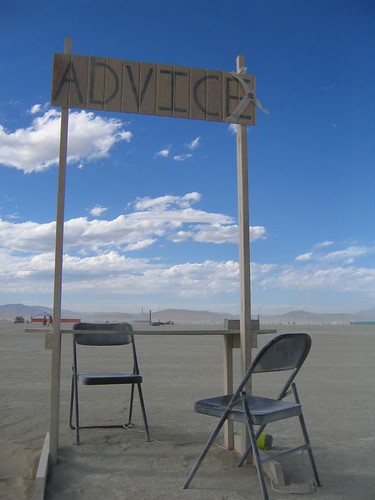
My Advice?

I was excited and flattered when an instructor emailed me to ask if she could interview me for a class she is teaching about being a technology integration specialist. Since it is a class early on in the program it mostly covers what it means to be an integration specialist - what skills are involved and such. So the questions were pretty much what I expected: What would you say are your major responsibilities? What is a typical day like as an integration specialist? (This was the hardest question to answer as no two days are alike.) What advice do you have for those looking to become technology integration specialists? It is this last question that was both the easiest and I feel most important question she could have asked. And these are the main points of my answer:
  • Expand your Professional Learning Network (PLN) - I learn SO MUCH when I take time to read my RSS feeds and just "listen" to the education talk that occurs on sites like Twitter. 
  • Be approachable, but not a door mat. - It is important that the educators and students you support know that you will help them when they need it, but don't do the work for them. If needs support keep your hands off of their computer if at all possible. This may possibly be one of the hardest things I had to learn because "I can do it faster." But, if you fix the problems for them, they will come back again expecting you to fix another problem and won't ever learn the skills themselves.
  • Don't let your work take over your life. - It is so easy to sit down "for just a few minutes" with your computer in the evening and then realize that two hours have passed. One of my favorite aspects of my job is that I get to explore the internet for new tools and exciting ways to use them in the classroom. But this can be very time consuming and can cause you to feel overwhelmed if you are not careful.
There were of course a number of other things I could have said, but I felt these were some of the biggest ideas that I wanted to convey.  And of course as soon as I publish this post there will be even more that I wished I had added.


Image courtesy of Flickr and laughlin

Thursday, February 25, 2010

Power Trips in Education

Have you ever noticed the number of people that are apparently on serious power trips in the world of education? From the physics instructor who destroys a laptop in class to emphasize that laptops are not allowed in his class. (What is this guys scared of anyway? That students might learn additional information than he isn't giving in his lecture??) Or administrators that create rules for students simply so they can play "Gotcha!" when a student breaks the rules. To districts blocking Youtube, photosharing sites and a vast number of other internet tools all in the name of internet safety. Or the classroom teacher that simply feels that if they were capable of learning without all these "new, fancy tools" their students should be able to do so as well. All of these are intended to make sure everyone around knows "who's in charge" and that deviants will be punished. 

But why? Why must there be keepers of the knowledge or controllers of the access? If our goal as educators is to make sure our students are prepared for life after school, why then are we actually preparing them for life thirty to forty years ago? Billie McNamara in an article title "The Skill Gap" states "Today, basic soft skills dominate workplace needs: interpersonal and intrapersonal knowledge; skills and abilities such as ethics, personal organization and work habits; time management; teamwork and interpersonal communication; anger management; reasoning and problem solving; and managing one’s learning." How are we preparing students for a work environment that requires them to manage their own time, work with others, manage their own learning and solve problems if we are controlling every move they make? It seems to me that we are moving students in the exact opposite direction of where we want them to be by NOT allowing them to think for themselves or have any say in the direction of their learning. 


Personally it is so rewarding to give students the power select which tools they will use in the learning process and to give them a say in how to reach the learning objectives. This not only allows students to learn those "soft skills" that so many employers are looking for in new employees, but it actually reduces stress on the teacher - it's really quite liberating. So what do you say? Can you give it a try? Just let go...

Image courtesy of Flickr and Jackaraia

Monday, November 30, 2009

2 1/2 Months Later...

It's been about two-and-a-half months now that I have going to a local middle school once a week to provide professional development sessions on integrating technology into their specific curricular areas and the district's new lesson structure model. This experience has definitely been eye-opening! As a whole, the staff was pretty comfortable with using technology for themselves but were not very comfortable allowing students to use technology, which is the intended goal for the massive amount of money spent on classroom technology. I am glad to report that both teacher comfort allowing students to use technology and actual student use of technology went up in this very short time frame! A few things to note:
  1. While more teachers were allowing students to use technology in class, the number of classrooms using technology did not go up. In other words, the same amount of classrooms had technology use occurring, but more of if was student use rather than teacher use.
  2. I feel a large part of this success is due to the fact that the instructional coaches jumped right in with both feet on integrating technology into ALL professional development.
  3. While survey results would lead one to believe that student engagement went down, I don't believe that is actually the case. During the course of this semester, the definition "actively engaged" was clarified to the staff members. I believe this is why the results showed a drop in students that were actively engaged, as all conversations with staff members indicate that students were more engaged in the learning. 
Teacher Survey Results
View more presentations from Erin Misegadis.


Overall I think that the work done this semester was beneficial to all involved and I hope that the coaches will be able to continue to support technology integration into their professional development sessions and that the students will benefit from this experience.

Tuesday, November 3, 2009

What's the "Right Answer"?


This morning I read a post on David Freeburg's blog Epic Epoch about differentiating and his thoughts about whether the process or the product was the most important component of the learning experience. This of course got me thinking about our students today. One of the comments left was that his students are more concerned about getting the "right answer" than they are learning from the process. But how did they get that way? Are we born that way? Or have years of education where you must have the correct answers on the test in order to pass made students that way? I've even been in professional development sessions where teachers have asked "You've shown us a lot of ways to teach this concept. Which is the best way?" That to me leads me to think that the problem is not with students, but that the problem is with the system.
If you give a group of primary aged students some "crafts" supplies and tell them to build a model of a house, they'll dive right in and start building. They won't even think about how their teacher thinks it should look nor will they worry about "right way" to build it. They'll simply dump the supplies out and start working to build a house. But, if you give those same supplies to a secondary level student and tell them to build a model of a house, it is almost guaranteed that they'll start asking questions. "How many points is this worth?" "How big does it have to be?" "Is there an example I can look at so I can get it right?" 
What happens between those early elementary years and middle school that students are becoming disconnected from the fun of learning? Even further, what will happen to those same students when a grade is no longer attached to a product? As educators we need to recognize the fact that learning is much more than "getting the right answer." It is about learning to learn. If we as educators do not start to focus on the process, students won't either and we'll have no one to blame but ourselves when our students fail. We've got to acknowledge that we are the ones that need to implement change, and only when that happens will our students' enthusiasm for learning grow. Only then will our students truly become life-long learners. 

Image courtesy of Flickr and jason03yingling.

Friday, October 23, 2009

Please Step Away from the Textbook!


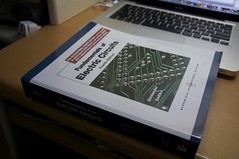
Textbooks are a staple in most classrooms and can be a great resource for teachers. The problem I find (not that I am even close to the first person to realize this) is that a large number of teachers use their textbook and accompanying teacher's guide as the ONLY resource for teaching. This is prominent from kindergarten all the way to post-secondary education. The problem with this is that teaching from the textbook shuts the door in the faces of students and locks them into their classrooms. Our world holds so many resources for educators - all we have to do is open our eyes and minds and look for them. 

Students today are collaborative, communicate with their peers on a highly frequent basis, create, explore, adapt, and design - except when they are in school. Often times when students enter school they are asked to “power down” their phones, computers, and themselves. On their own, students use technology to explore their world and communicate with others. But in their classrooms, many times the option to use those tools is not available to them. In a large portion of these classrooms, the reason isn’t a lack of access, but rather teachers simply aren’t allowing the students to use the tools available to them.  This lack of use is usually born out of one thing - fear. A fear that the technology may not work properly, a fear that things may not "go as planned," a fear that the students might abuse the technology, and probably mostly a fear of not being the expert in front of students. While it is okay to be afraid, it is not acceptable to allow that fear to prevent you from creating a more appropriate learning environment for students. Even if nothing works they way you plan and the students end up having to show you how to use the tools, the learning that will occur in that time will be completely worth it. The experience may even allow you to see strengths in your students that you may have never before seen.


If you are reading this post you are probably not tied to your textbook, but I'm willing to bet that you know someone that is. So why not offer up a few ideas to that person that will help them expand a learning environment beyond their classroom walls, or at least beyond the covers of the textbook? Introduce someone to the power of the internet for not only creating more engaging learning environment, but also as a way to extend their own learning network. If you're just starting to explore your options outside of your textbook, seek out another person to either explore with you or someone who could act as a mentor and guide in your journey. Trust me, whether you enter the partnership as a guide or "student" you will find yourself learning from the experience and eager to do more learning and exploring.


A couple of days ago someone on Twitter posted a link to David Warlick's article If you can't use technology get out of teaching! which inspired this post, so thanks to my PLN in Twitter (and David Warlick of course.)

Image courtesy of  joewhk and Flickr.