Showing posts with label leading. Show all posts

Tuesday, November 27, 2012

GREAT WORK - You did the bare minimum!!

Somehow, somewhere along the line it has become a custom in our society to expect praise for simply following expectations. "Aren't you proud of me Miss? I have a pass to be in the hallway!" "Look at the medal I got because my mom signed me up for sports and took me to the games!" "You passed the assessment because you got 1/2 the questions right!" I mean we all like to be praised. Who doesn't like it when we're told how fantastic we are? Or that someone is proud of us? But at what point does it become pushing everyone to the middle? When I was a kid I was so proud of my medals and trophies that had a place value on them (1st, 2nd, etc) but I also distinctly remember throwing them out as I got older if they said something along the lines of "Certificate of Participation." Well I KNOW I participated - I was THERE! My daughter (whom I love and adore and have clearly somehow raised her to display the following behavior) said to me the other day "Hey I'm on time. Aren't you proud of me? Can I have a (fill in the blank with random teen-aged stuff) because I came home on time?" My reply of course was "Uh no, you CAN continue to have normal PRIVILEGES though because you were on time tonight. I love you!" Now don't get me wrong, when she does something that blows my mind, I let her know just how amazing she is. Such as when she made the talent show and sang so beautifully it made me cry, I told her that it was so beautiful I cried and that I think she's completely fantastic. Or when she lettered as a freshman at a 6A high school in Cross Country, I rushed out to buy the letter jacket and sewed the letter on it myself. But it seems that we (as a society) have come to expect things to be given to us simply because we show up. There are a number of professions where people actively petition against work evaluations or merit-based pay, yet many of these same people expect a yearly raise simply for coming to work on a regular basis. I just don't understand. 

I distinctly remember receiving a state reading assessment score in elementary school and asking my mom what the 90+ percentile meant. She smiled at me, told me she was proud of me and explained "That means if 100 people lined up in order of their scores, you'd be ahead of more than 90 of them in line." I remember that because I had worked really hard on that test and was incredibly proud of my achievement - not because I happen to just show up and do the minimum. On the opposite end of that spectrum, I remember coming in WAY past curfew one night and being told I would be "volunteering" with my sister's cheer squad at a fireworks stand the whole rest of the 4th of July weekend instead of hanging out with my friends like I had planned. My parents set very clear standards for my behavior and I knew that it was my responsibility to follow these standards. If I did something above and beyond the minimum, I was praised and I enjoyed that because it was heartfelt praise and I knew my parents were genuinely proud of me. If I failed to meet the minimum standard, I knew negative consequences were appropriately headed my way. Perhaps this type of upbringing is what has made me the matter-of-fact, outspoken person I am that can sometimes be "a bit too much" for some folks to handle. And I know it's made me the kind of person that would be a less-than-adequate preschool and elementary school teacher. But it's also this same upbringing that gave me the drive to finish high school even though I made the poor choice to become pregnant at 17, complete my bachelor's degree while working full-time to raise that young child, obtain a master's degree while working full-time and continue to work hard to further my career success.  I've learned through these life experiences that I enjoy a challenge and the feeling of personal accomplishment that comes with meeting a challenge head on and conquering it. Is that so bad? Do we not wish our children have better lives than we have? Do we not want our children to work hard so THEIR kids can have better lives than they have? If we continue to tell people "Great work!" simply for showing up, or "You're amazing!" because they've met the bare minimum, where will our society be when my kids are my age? Or my parents' age? I don't know the answers to these questions, but I don't really have a great feeling about it...

Image courtesy of http://www.fotopedia.com. 


Wednesday, February 8, 2012

Where Have All the Parents Gone?

Caution: It's about to get real candid up in here!
I serve many roles at my school in addition to technology teacher. I am also a mentor, after school tutor and lunch recess supervisor. I get to know my students on a completely different level in these roles than I do as a classroom teacher and make connections I would not otherwise probably be able to make. At recess I am able to be a little more goofy than normal with the kids, in my tutoring group I serve as a reading teacher and with my mentoring group I get to help kids learn who they are as people. At the exact same time though, I "get" to learn more about my students' lives than many people do.
 Now, let's preface all of this by saying I was certainly no angel growing up and saw some things in my home that I have made sure as an adult that my own personal children will NEVER see. The fact that I had my oldest daughter my senior year in high school is a testament to that. Nevertheless, I have used all of that life experience in my career as an educator in order to connect with my students. But, my heart is broken nearly on a daily basis by the lives that I see my students living outside of the walls of our school. 
On the playground I hear some of the most foul language possible to hear, as well as some extremely sexually explicit comments. Yes, some of this comes from media in our culture, but the graphic nature of the conversation indicates that not only are they being allowed to take in media that is completely inappropriate, but also that they are hearing that type of talk in casual conversations at home. Never mind the types of clothing that my students are wearing to school...it's quite disturbing at times. 
I tutor 6-8 grades students and have three students that are at or below my 1st grade daughter's reading level. The heart-wrenching part is that they are completely oblivious to the fact that they should be able to read much more difficult texts. It pains me to think that "my kids" weren't read to as small children. No one sat with them at bed time and read Green Eggs and Ham or the The Napping House. In conversation with them, I learn that for most of them they didn't even HAVE books in their homes when they were little - nor did they have crayons, markers, scissors and paper to use for crafts. 
In making phone calls home to my mentoring students I call just as many grandmas and "aunties" as I do moms and dads. I see kids with pants that are far too small, shoes that have been worn way past their end of life and children taking home bags of food from the Communities in Schools programs because there just any food at home. I have homeless students, students who travel from one parent "home" to the other having to be the adult in both homes and so many students who don't even know both of their parents that it makes me want to cry. 
I'm just so incredibly baffled by how this can possibly be. I messed up my life big time as a teenager when I got pregnant but I have spent every day since trying to make a good life for my daughter and be a positive and strong role model for her. I understand that life happens, circumstances aren't always what they want them to be, but how can anyone just GIVE UP on their kids? How can I have students with all of their brothers and sisters being gang members? How do I have a student hand me a picture of a family member and the student says "This is my nephew and his daddy - he looks really high huh?" In what kind of home does a child have to live that they find it perfectly normal to come to school and call their peers and teachers every  cuss word imaginable? 
There are days that all I can do is sit with a student and let her cry in my room, or let a boy sleep instead of complete the classwork because he didn't have a bed to sleep in the night before. Some days I just sit in my classroom after they've all gone and cry myself because I know I can just never do enough in the small amount of time I have with them. All I can do is take solace in the fact that I know I can provide a safe, caring and stimulating environment for them to grow and learn. 


Image courtesy of http://writeaboutnowjt.wordpress.com

Friday, March 26, 2010

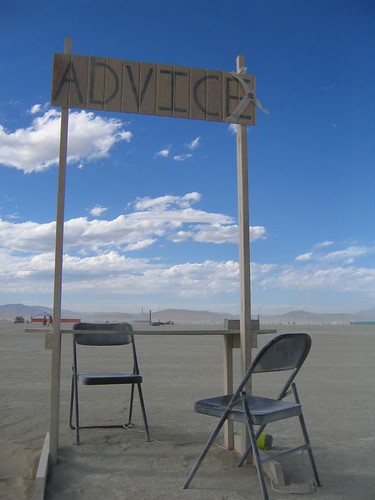
My Advice?

I was excited and flattered when an instructor emailed me to ask if she could interview me for a class she is teaching about being a technology integration specialist. Since it is a class early on in the program it mostly covers what it means to be an integration specialist - what skills are involved and such. So the questions were pretty much what I expected: What would you say are your major responsibilities? What is a typical day like as an integration specialist? (This was the hardest question to answer as no two days are alike.) What advice do you have for those looking to become technology integration specialists? It is this last question that was both the easiest and I feel most important question she could have asked. And these are the main points of my answer:
  • Expand your Professional Learning Network (PLN) - I learn SO MUCH when I take time to read my RSS feeds and just "listen" to the education talk that occurs on sites like Twitter. 
  • Be approachable, but not a door mat. - It is important that the educators and students you support know that you will help them when they need it, but don't do the work for them. If needs support keep your hands off of their computer if at all possible. This may possibly be one of the hardest things I had to learn because "I can do it faster." But, if you fix the problems for them, they will come back again expecting you to fix another problem and won't ever learn the skills themselves.
  • Don't let your work take over your life. - It is so easy to sit down "for just a few minutes" with your computer in the evening and then realize that two hours have passed. One of my favorite aspects of my job is that I get to explore the internet for new tools and exciting ways to use them in the classroom. But this can be very time consuming and can cause you to feel overwhelmed if you are not careful.
There were of course a number of other things I could have said, but I felt these were some of the biggest ideas that I wanted to convey.  And of course as soon as I publish this post there will be even more that I wished I had added.


Image courtesy of Flickr and laughlin

Tuesday, March 16, 2010

Kansas Roads More Important than Education?

I just saw on local news channel KWCH that Reader's Digest ranked the roads in Kansas number one in the nation, which was of course followed by an interview with an official from the Kansas Department of Transportation telling folks why we shouldn't have to cut any money out of the KDOT budget next year. That we would certainly drop from the prestigious rank of #1 if we were to cut the KDOT budget.

At the same time, the district where I work is looking at having to cut somewhere around $25 MILLION from our budget for next year - and that's just one district. Top that with the fact that the state has already been delinquent making payments to school districts a number of times this year and it leads to some potentially terrifying implications for our education system in Kansas.

Now it may be that I am biased because I am an educator, but it seems to me a really easy way to get more money into the education budget would be to move some of the money from the KDOT budget over to the education budget. I know as a Americans we are taught that it we must be number one (think how many times the medal count was displayed on NBC during the Olympics) but as a Kansan I am really okay with letting our road conditions slide down the list a bit if that means our students can continue to get the educations they deserve.

Image courtesy of Flickr and TheDphotography.

Thursday, February 25, 2010

Power Trips in Education

Have you ever noticed the number of people that are apparently on serious power trips in the world of education? From the physics instructor who destroys a laptop in class to emphasize that laptops are not allowed in his class. (What is this guys scared of anyway? That students might learn additional information than he isn't giving in his lecture??) Or administrators that create rules for students simply so they can play "Gotcha!" when a student breaks the rules. To districts blocking Youtube, photosharing sites and a vast number of other internet tools all in the name of internet safety. Or the classroom teacher that simply feels that if they were capable of learning without all these "new, fancy tools" their students should be able to do so as well. All of these are intended to make sure everyone around knows "who's in charge" and that deviants will be punished. 

But why? Why must there be keepers of the knowledge or controllers of the access? If our goal as educators is to make sure our students are prepared for life after school, why then are we actually preparing them for life thirty to forty years ago? Billie McNamara in an article title "The Skill Gap" states "Today, basic soft skills dominate workplace needs: interpersonal and intrapersonal knowledge; skills and abilities such as ethics, personal organization and work habits; time management; teamwork and interpersonal communication; anger management; reasoning and problem solving; and managing one’s learning." How are we preparing students for a work environment that requires them to manage their own time, work with others, manage their own learning and solve problems if we are controlling every move they make? It seems to me that we are moving students in the exact opposite direction of where we want them to be by NOT allowing them to think for themselves or have any say in the direction of their learning. 


Personally it is so rewarding to give students the power select which tools they will use in the learning process and to give them a say in how to reach the learning objectives. This not only allows students to learn those "soft skills" that so many employers are looking for in new employees, but it actually reduces stress on the teacher - it's really quite liberating. So what do you say? Can you give it a try? Just let go...

Image courtesy of Flickr and Jackaraia

Friday, December 11, 2009

An Awakening Failure


I have a confession to make...

I failed the second semester of my junior year of high school. 

I had chosen Ralph Waldo Emerson as a topic for my junior research paper, which was the majority of the semester's grade. I painstakingly created 25 note cards documenting my research and wrote my rough and final drafts. But when it cam time to turn in my paper, I had lost my note cards. And since I have been a procrastinator since birth, I didn't complete the assignment until the night before it was due. This meant that I didn't have time to re-make those note cards and received an F on my research paper and an F for the semester.


To this day I have no idea what I learned from that experience. As I am scouring my action research paper for APA errors, I am having flashbacks to that time of failure in my life. I still wonder why it wasn't enough she had already given me the points for completing the note cards on time earlier in the semester. I don't know if I ever told my parents the real reason I failed that assignment. I don't even remember if I had enough guts to ask for extended time to create a new set. I wonder now as I did then, what the educational value failing a student for losing a stack of cards was. I still enjoy Emerson's work and remember some of what I had learned from the research. But what I remember most is crying while digging through my closet, locker and car looking for those cards because I knew that without them I would fail. 


So I guess I did learn from that experience, although it wasn't what my teacher had intended. I still lose paper almost as soon as I put it down (so thank goodness I can take notes on my laptop.) And I still have no idea how to properly document my resources in MLA or APA. What I learned was that was one thing that I never wanted to do to my students, even though at the time I didn't know I was going to be an educator. All I knew was that I never wanted to another person to feel the way I had because of something I had done. 


Image courtesy of Wikimedia Commons.

Friday, October 23, 2009

Please Step Away from the Textbook!


Textbooks are a staple in most classrooms and can be a great resource for teachers. The problem I find (not that I am even close to the first person to realize this) is that a large number of teachers use their textbook and accompanying teacher's guide as the ONLY resource for teaching. This is prominent from kindergarten all the way to post-secondary education. The problem with this is that teaching from the textbook shuts the door in the faces of students and locks them into their classrooms. Our world holds so many resources for educators - all we have to do is open our eyes and minds and look for them. 

Students today are collaborative, communicate with their peers on a highly frequent basis, create, explore, adapt, and design - except when they are in school. Often times when students enter school they are asked to “power down” their phones, computers, and themselves. On their own, students use technology to explore their world and communicate with others. But in their classrooms, many times the option to use those tools is not available to them. In a large portion of these classrooms, the reason isn’t a lack of access, but rather teachers simply aren’t allowing the students to use the tools available to them.  This lack of use is usually born out of one thing - fear. A fear that the technology may not work properly, a fear that things may not "go as planned," a fear that the students might abuse the technology, and probably mostly a fear of not being the expert in front of students. While it is okay to be afraid, it is not acceptable to allow that fear to prevent you from creating a more appropriate learning environment for students. Even if nothing works they way you plan and the students end up having to show you how to use the tools, the learning that will occur in that time will be completely worth it. The experience may even allow you to see strengths in your students that you may have never before seen.


If you are reading this post you are probably not tied to your textbook, but I'm willing to bet that you know someone that is. So why not offer up a few ideas to that person that will help them expand a learning environment beyond their classroom walls, or at least beyond the covers of the textbook? Introduce someone to the power of the internet for not only creating more engaging learning environment, but also as a way to extend their own learning network. If you're just starting to explore your options outside of your textbook, seek out another person to either explore with you or someone who could act as a mentor and guide in your journey. Trust me, whether you enter the partnership as a guide or "student" you will find yourself learning from the experience and eager to do more learning and exploring.


A couple of days ago someone on Twitter posted a link to David Warlick's article If you can't use technology get out of teaching! which inspired this post, so thanks to my PLN in Twitter (and David Warlick of course.)

Image courtesy of  joewhk and Flickr.

Thursday, August 27, 2009

Blurring the Lines

I am an Instructional Technology Specialist (ITS). It is my job to help teachers to integrate technology into their instruction in order to improve the learning experience for students. When I grappled with the decision of whether or not to leave the classroom I finally decided that I can impact the learning of far more students in this role and took the leap, and I truly love my job. I get the opportunity to lead PD sessions, co-teach lessons with other teachers, and offer one-on-one sessions all in the hopes that more students will be impacted by an improved and more appropriate learning environment.

All that being said, the line between "ITS" and "Help Desk" are often blurred. During my training sessions I hand out my card to anyone who wants it and offer my continued support for helping participants integrate technology into their instruction. But because I hand out my card so readily, I also get a number of calls from people wanting me to fix their computer or hardware. This is where the lines start to blur. Because I am fluent a number of software and internet applications, I have by default learned to trouble-shoot computers and a number of different types of hardware. So the teacher in me want to teach others how to trouble-shoot themselves so they don't have to make more pleas for help, but the ITS in me wants to tell people that it isn't my job to fix their computer and that they need to call their building's tech or the Help Desk. Of course I usually end up teaching them to fix it and then I end up getting more calls and emails for hardware issues.

Another reason the lines are blurred is because I manage the accounts, usernames, and a variety of other "technical support" types of functions for a variety of applications in the district. For example, because I am the website administrator/trainer for our district, I also inherited the job of managing the web server. This further leads people to call me to help them when they need both instructional and technical help with technology. And again, the teacher in me usually wins out and I end up teaching more people how to trouble-shoot and fix their hardware issues.

The reason I let my inner teacher come out in these instances is that I want the issues to be taken care of quickly so that the teachers can get back to teaching and the students can be more positively impacted.The fact is if they have to wait until their building tech can come check on their problem, the learning utilizing that tool will be put on hold and students will be negatively impacted. I also feel that the more teachers know how to do on their own for technical support, the more I will get to do on the instructional side of technology integration. I feel that if I just teach this teacher to be a little more confident in his/her abilities his/her comfort level with technology will increase and the integration will happen more readily. The problem is that there are just so many teachers out there and I get stuck in this vicious cycle that just seems to keep going around and around. The solution for now seems to be keep plowing forward and try to help as many people as possible.

Image courtesy of Flickr and
Philou.cn.

Wednesday, August 12, 2009

Glass Half-empty or Half-full?

In my job I run into a large number of nay-sayers, negative Nancys (or Neds), glass-half-empties, or whatever it is you call a person that always sees the flaws and defects in something first. You know them. When you show them how to use a blog as an online journal for their classroom, the first thing they say is "my kids can't use the internet at home" or "no way I can get into the lab enough to make it worth the work." As soon as you show them an internet-based alternative to the "Inspiration" software they don't have in their new school, they're pointing out how this tool only saves as an image so you can't edit it later. When you show them how to create student usernames and passwords for their wiki or content management system, they're upset because they already know their students won't be able to remember the password. You know them.
And as much as I try, this can at times be a drain on me, both emotionally and physically. Just this week I was at a school helping teachers learn to use their new SMART boards and the complaints came in mountains. The vast number of pre-made lessons available on our website weren't exactly how they wanted and they don't have the time to learn a new tool. "Does the board really have to be re-oriented every time I move the projector?" "I've had that table there for three years and now I have to move it because someone put this board in my room. That table won't work anywhere else in my room." And this is only about a SMART board. I don't even want to get into the conversations that happened when teachers found out that our contract with Blackboard isn't going to be extended and that they'd have to learn a new tool if they wanted to keep their content online.
I have come to realize that it is part of my job to keep smiling and holding hands so that teachers don't lose faith, so that teachers will keep trying new ideas, and so that classrooms can take yet another step to being student-centered learning environments. This is the most difficult and important part of my job and it wasn't even in the job description when I applied. So after a couple of years, I've stumbled across some concepts that seem to help me do this, the most important part of my job.
To begin, I always try to let "Nancy" know that her opinion is valid. Even if I think it is an imagined hurdle or fear, in that person's mind it is real and therefore I need to listen and validate it. I also need to make sure I stay positive while I'm listening and responding so that "Nancy" will see that there really is a light at the end of that tunnel. It also helps to be a quick thinker and problem solver so that when a teacher comes across a hurdle, I/we can quickly come up with a solution for getting over that hurdle. The next part is something that I personally have to work really hard at doing, and that is checking back frequently to make sure the solution is still working. I have found this one to be important because so many times if there is one bump in the new road for that teacher, that bump will keep him/her from traveling that road at all. But I have found that if I check back with individuals, it seems to keep the motivation up and that they will eventually feel comfortable enough that they can contact me without waiting for my emails. Finally, I have to be continually looking for new ideas and ways for teaching "old" concepts. This is because technology is changing so rapidly and new hurdles and bumps show up in the road every day. This one is probably one of the best parts of my job, as it means I get to spend time surfing the net and learning from my PLN which always leaves me inspired to do more.

And just in case you're wondering, here's a few suggestions for the problems presented above. For blogging nay-sayers: suggest that maybe at first try using the blog as an extra-credit opportunity for journals to see how many students truly don't have access to internet at home. For those upset that free mind-mapping tools don't often allow for changes and updates, point out some of the great online image editing tools that will allow for later "additions" so that teachers can demonstrate to students how the learning process is continually changing and growing. And for the teacher that's worried her students won't remember passwords, well this is one I still don't have a fantastic response for so if you have one - help me out and leave it in the comments section.

Image courtesy of Flickr and livcheng.

Thursday, July 23, 2009

Personal Paradigm Shift

I've been reading a number of blog posts lately about the term "Web 2.0" being a completely useless term and I must admit that I have felt this way for quite some time. The term does nothing to describe its meaning to those that don't understand it, is already getting quite "old" to those of us that do, and is meaningless to today's students because the web has always been interactive to them. With all that being said, I find myself using the term "web 2.0" anyway, mostly out of laziness. I have a wiki site that I often use as a resource for training, and it has a (web 2.0) page called "Internet Resources," but I don't feel this really explains the nature of these tools either. I'm looking for a term that says "interactive, dynamic, user-friendly, engaging, free internet websites" but is catchy and fun.
My struggle with the term is not only that it doesn't describe or indicate in any way the power or application of the tools, but it also seems automatically throw up a barrier between the "tech literate" and the "not so literate" folks. This is a problem for me because it will automatically prevent people from listening if they don't understand the terminology being used. I've always felt that when people use a lot of technical jargon in their presentations and explanations that all they really want to do is prove to the audience how smart they are. After I've completed a class or PD session, if the exit surveys indicate that "Erin was really patient when participants needed additional help or explanations" or that "Erin was able to break down the concepts into easy to understand terms," then I feel that I've done my job. If the survey reflects thoughts such as "I am completely overwhelmed and don't know how to use anything from this session," then I have not done my job and that I have probably hindered the progress of those participants, rather than furthered it.
I suppose that the fact still remains that no matter how frustrated I am with the term, it is here to stay - at least for a while. The only solace I can find is that as the internet and its tools continue to evolve, surely the nomenclature will do the same and we won't have to live with the term "forever."

Image courtesy of Flickr and
Leo Reynolds

Saturday, April 18, 2009

Coaches Make Better Teachers?


For the last several years I have been blessed with the opportunity to be a coach in addition to my role as a teacher. I started as a track coach for the urban school where I was teaching at the time. This was such an exciting time for me and it allowed me to connect with my students in a completely different way than I had been able to in the science classroom. I quickly realized though that I was going to have to enlist the help of others in order to get my athletes to where I wanted them to be. Since I am not quite 5'2", I am not any kind of authority in jumping events - at all. So of course I had to start researching the best way to coach long and high jumpers. I was lucky enough to have another coach that was pretty good with hurdlers, so I was able to have him coach my girls that were brave enough to try to tackle the hurdles. Then I had to make sure my distance runners and sprinters were getting the right kind of conditioning. Not to mention making sure the relay teams got some time to work on handing off the baton. Each day it was necessary to plan out practice making sure each group of girls was getting a good workout that would prepare them for their events in the next meet. It was a lot of stress and work, and there were definitely times where at the end of a meet we realized that I had not been an effective coach in one area or another. So we (the assistant coach, myself, and the girls) would re-evaluate the situation and look for a new approach. Most importantly, my girls knew that I would never expect them to do something that I myself wasn't willing to do - or at least try. So at each practice I would spend time stretching, running, "jumping" and participating in the training in some way. Sometimes I did well, and other times I fell on my rear (mostly when I was trying the jumping events.) The important part was that my girls saw me fall down and get back up time and time again. They knew that it was ok to not win every time, but that you always have to get back up and try it again.

When the season was over I realized that when I was coaching track was the first time I had really ever differentiated my instruction. This gave me the inspiration and drive to take that strategy into my classroom. I spent the summer teaching 3-7 graders the basics to chemistry and the entire class was hands-on activities, differentiated for the different grade and ability levels. It was so much fun for me and the students and it reinforced the idea that differentiating instruction is the most powerful thing you can do for students. So the next school year it was on! My students, much like my athletes, got to have an active part in how the learning environment was structured and what types of activities we would do in class. Again, I always made sure my students saw me actively communicating, collaborating, and participating with them in their learning. We learned together the best methods for carrying out an experiment. There were definitely times when my students saw me "be wrong" or "fail" in our experiments. Much like in coaching, I would simply talk about what went wrong with the students and we would try again with a new approach. Every time we would "get back up on the horse" and give it another go. Another component that I found to be valuable to my students is letting them see me NOT be the expert with all the answers. Much like when I was coaching, the teaching was a constant learning experience for me and my students, and we were all able to learn and grow together. If we didn't know the answer, it was just another opportunity to expand on our problem-solving skills and find the answer together. This was another opportunity to do what I had learned in coaching, which is to model the drive and desire for learning that I wanted my students to have themselves.

Most importantly in all of these roles, I always make sure my students (or athletes) see me having fun and know that they are what makes it fun. I can't always guarantee that ALL of my kids enjoyed having me as a coach or a teacher, but I do feel that being a coach is still the biggest thing that influenced my teaching. That first year after I started teaching, I was able to make the most amazing connections with my students and I truly believe it was because I implemented my coaching techniques into my classroom.